
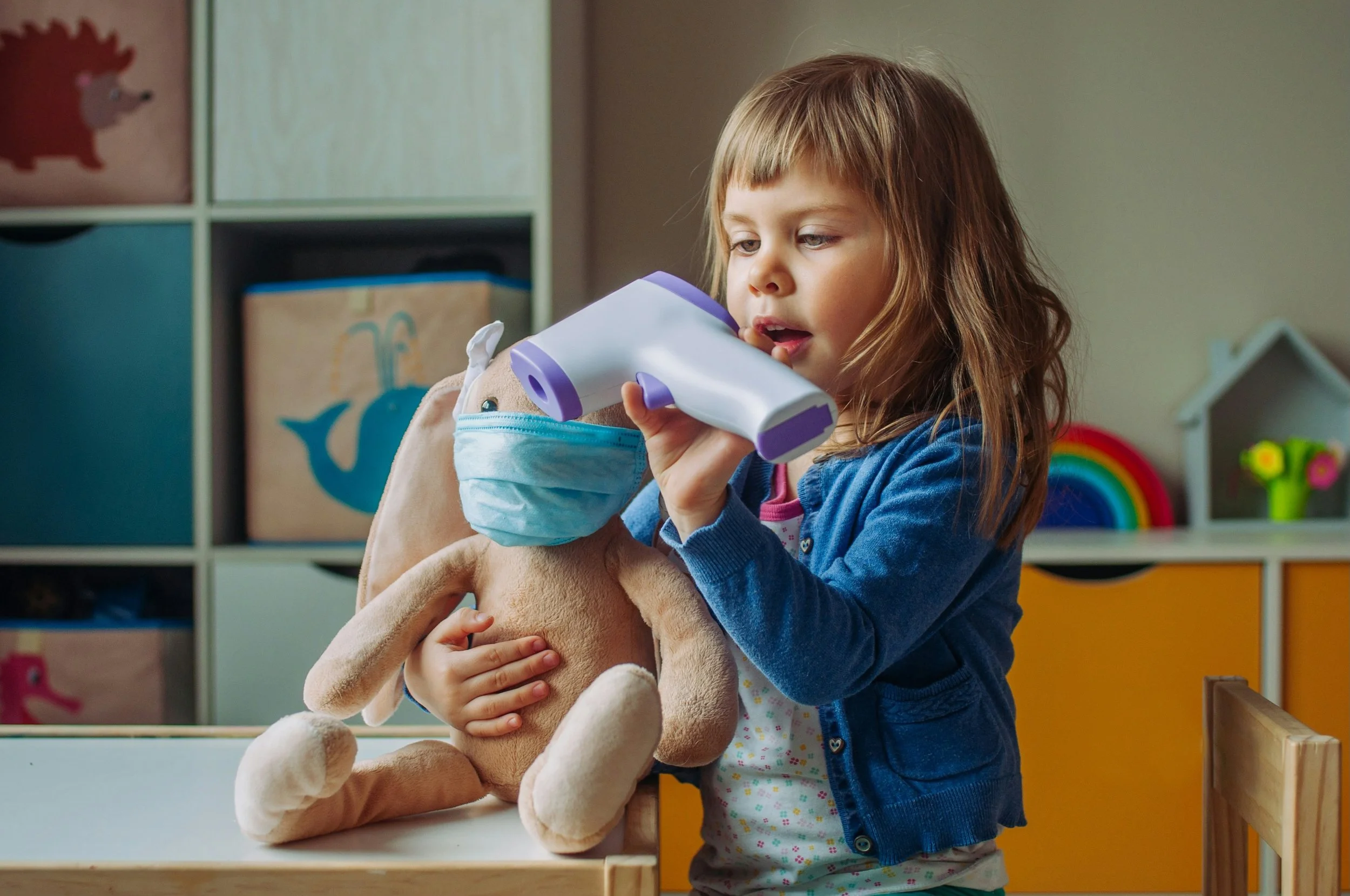
Play Therapy in Philadelphia for Children
All of You Therapy provides in-person play therapy for children in Center City Philadelphia. Our child therapists use play, sand tray, art, movement, Theraplay, and other relational approaches to help children communicate experiences they may not yet have words for.
When Your Child Is Struggling, It Can Feel Like You're Constantly Guessing
Maybe your child melts down every day after school.
Their teacher describes them as kind, flexible, and well-behaved. Then they walk through your front door and it's as if every small thing becomes unbearable. The wrong snack. The wrong cup. Limits being set on the number of Roblox hours. A sibling, well…existing.
It might feel hard to admit, but you've started dreading the hours between school and bedtime.
Maybe bedtime has become a two-hour process.
Impulsive decisions. Emotional outbursts. Constant conflict with siblings. Big reactions to seemingly small problems. You've tried explaining, reminding, rewarding, and correcting. Nothing seems to stick.
Or maybe there isn't one big thing you can point to.
No major crisis. No alarming behavior.
Just a growing sense that your child is struggling and neither of you knows why.
You want to help.
You've read the parenting books. You've listened to the podcasts. You've tried the sticker chart, the reward system, the calm-down corner, the consequences, the behavior plan.
Sometimes they help. Often they don't.
Parents already know a lot.
The issue is rarely that the child doesn’t know it’s “not okay” to… (hit/kick/scream/bite/yell/pee-on-the-floor-way-past-being-potty-trained, you name it)
The issue is often that the child is overwhelmed, anxious, scared, disconnected, grieving, dysregulated, etc., and those experiences can't be solved through explanation alone.
Children often don't have the words to tell us what they're feeling, why they're reacting, or what happened inside them.
Their experiences show up through behavior long before they show up through language.
That is where play therapy can help.

Why Play Therapy?
If any of those feel familiar, you're not alone.
Many of the families we work with arrive feeling exhausted, confused, and scared that they're missing something important.
Most are doing far better than they think they are.
What they need is support making sense of what their child is communicating.
Children are constantly communicating.
They communicate through behavior, through relationships, through their bodies, and through play.
The challenge is that children rarely communicate in ways adults expect.
A child who feels anxious may not say, "I'm worried."
They may refuse school, complain of stomachaches, ask for reassurance fifty times a day, or insist on sleeping in your bed.
A child who feels overwhelmed may not say, "Everything feels too big."
They may scream because their socks feel wrong.
A child carrying grief may not tell you they're sad.
They may become angry, withdrawn, clingy, or unusually sensitive.
A child who desperately wants to do well may not tell you they're terrified of making mistakes.
They may tear up their homework, shut down completely, or explode when something doesn't go exactly as planned.
Play therapy helps us understand the story underneath what adults can see on the surface.
Play therapy is a developmentally appropriate form of psychotherapy that allows children to express, process, and work through experiences using the language they know best: play.
Play is not a break from the work.
For children, play is the work.
Through carefully attuned therapeutic play, children can begin expressing fears, worries, sadness, confusion, anger, loneliness, shame, and experiences that may be difficult or impossible to put into words.
When those experiences can be understood and held within a safe relationship, healing becomes possible.
What Parents Often Tell Us Before They Call
"Everyone keeps telling me they'll grow out of it."
"My child is fine everywhere except at home."
"I don't know if this is anxiety, ADHD, autism, sensory issues, trauma, or just being a kid anymore."
"I just want to understand what's going on."
"I'm worried I'm making things worse."
"I feel like I'm walking on eggshells."
"I spend more time managing my child's emotions than enjoying them."
Most parents contact us because they're worried about behavior.
The meltdowns.
The aggression.
The anxiety.
The school refusal.
The emotional outbursts.
The constant reassurance-seeking.
The sibling conflict.
The bedtime battles.
That makes sense. Behavior is what parents can see.
But behavior is rarely the whole story.
Looking Beneath the Behavior
At All of You Therapy, we believe behavior is often the final chapter of a story that starts much deeper.
A child who melts down when it's time to leave the playground may not be struggling with compliance.
They may be struggling with flexibility, transitions, sensory overwhelm, anxiety, or a nervous system that has already reached its limit for the day.
A child who lashes out at their sibling may not need stronger consequences.
They may need support managing feelings that are moving through them faster than they can organize.
A child who refuses school may not need more rewards.
They may need help understanding and navigating the fear their body experiences every morning.
A child who asks for reassurance twenty times a day may not be seeking attention.
They may be trying to find safety.
This perspective shapes everything we do.
Rather than asking:
"How do we get this child to stop?"
We ask:
"What is this behavior telling us?"
"What need is going unmet?"
"What is happening inside this child's nervous system?"
"What experiences would help this child feel safer, more connected, and more capable?"
Those questions often lead us somewhere very different than traditional behavior-focused approaches.
And, in our experience, they lead to deeper and more lasting change.

What makes our approach different?
Many therapies focus primarily on changing behavior.
At All of You Therapy, rather than asking, "How do we get this child to stop?" we ask, "What is this child trying to tell us?"
Our work is grounded in attachment science, developmental psychology, interpersonal neurobiology, and trauma-informed care.
That means we understand challenging behavior not as evidence that a child is choosing to have a hard time, but as evidence that a child is having a hard time.
Because our goal is not simply to help children behave differently.
Our goal is to help them feel safer, understand themselves more fully, build stronger relationships, and develop the emotional capacities they will rely on throughout their lives.
When those foundations strengthen, meaningful change often follows.
Our Approach to Play Therapy
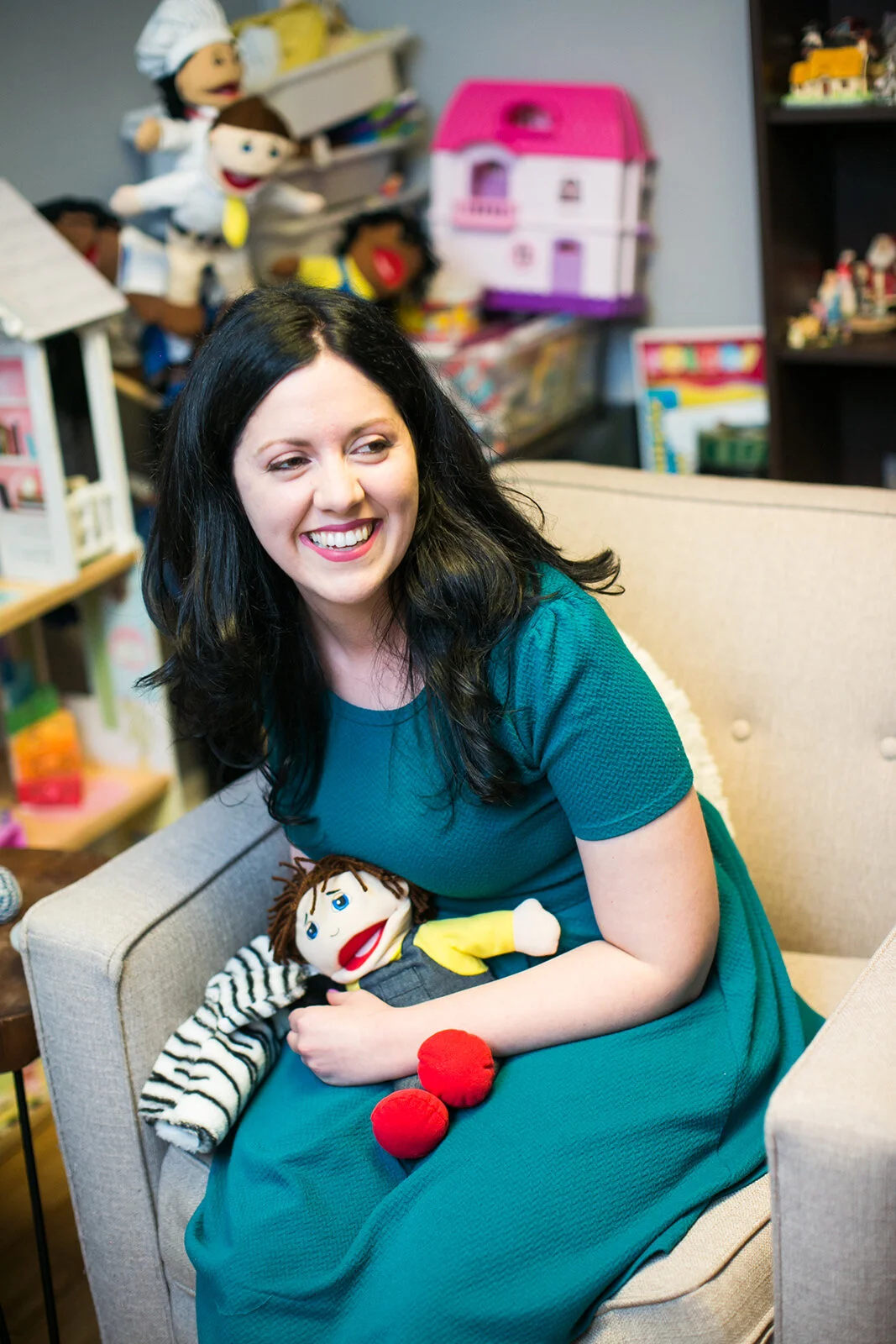
Play therapy gives children a way to express experiences they may not yet have words for.
Through play, children often show us things they cannot easily explain through conversation alone. Worries, frustrations, fears, relationship struggles, grief, confidence, and resilience all tend to emerge naturally in the playroom.
As therapists, we pay close attention to the themes that emerge in a child's play, the emotions underneath their behavior, and the ways they seek connection, protection, autonomy, and safety.
At the same time, we work closely with parents.
Because while therapy can be an important part of a child's growth, parents are the people who have the greatest opportunity to support healing and change in everyday life.
Together, we build a deeper understanding of your child's inner world, what overwhelms them, what helps them feel safe, and what support they need from the adults who love them most.
Our goal is not for your child to become dependent on therapy.
Our goal is to strengthen the understanding, relationships, and emotional capacities that help your child thrive long after therapy has ended.
We help children build the emotional foundations they'll rely on for the rest of their lives.
Frequently Asked Questions
-
Play therapy is most commonly used with children ages 3–12, though play-based and expressive approaches can also be effective with older children and adolescents. Play therapy techniques can even be useful for adults!
-
If your child seems anxious, emotionally reactive, withdrawn, overwhelmed, struggling socially, or simply unlike themselves, therapy may help. Your child does not need to have a diagnosis to be eligible for or benefit from therapy (though if you are seeking a ‘superbill’ for out of network, a diagnosis must be given for insurance reimbursement).
Many parents seek therapy not because of one major event, but because they can tell their child is struggling and want to understand why. -
To an untrained eye, it may look like we are “just playing”, but trained play therapists are carefully observing emotional themes, attachment patterns, strengths, fears, and opportunities for growth, often with the intention of translating these insights into tangible ways you can enhance your communication with and support of your child. Children often communicate in play what they are unable to put into words. We take this knowledge of what is being processed and expressed and use it to help your child learn new skills for managing tough emotional and social situations and we use it to help you you, as the parent/caregiver, make changes in service of your child.
-
Your child will experience better results when you gain the skills and confidence to be the best parent you can be. Rather than just spending an hour per week with your child, you get to be part of the process, to learn about your child alongside your therapist and ultimately feel more effective as a parent/caregiver.
Your own past and background influences how you parent, too. We’ll help you unpack how your own upbringing or childhood is impacting your child and give you the tools to break old patterns and create new ones.
-
Children need privacy in order to build trust and feel emotionally safe. Rather than sharing every detail, we discuss themes, observations, recommendations, and ways you can support your child outside of session.