
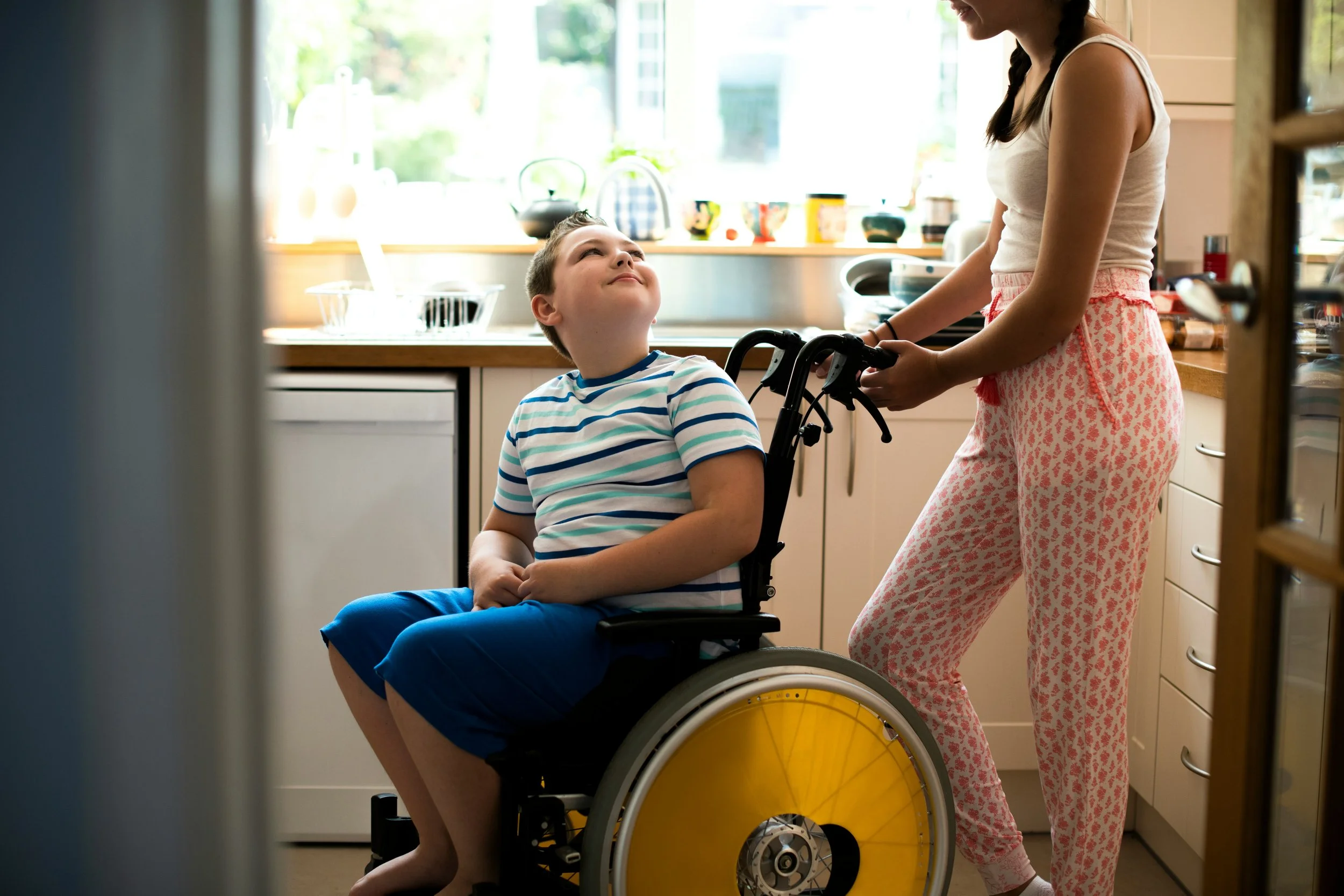
Therapy for “Glass Children”/Siblings of Children with Special Needs
in Center City, Philadelphia
and online across PA & NJ
When one child needs more, another child often learns to need less.
Therapy helps make room for both.
Families rarely choose this dynamic.
Sometimes one child has significant medical needs. Sometimes other mental health or developmental needs require a great deal of support. Sometimes they struggle with severe anxiety, OCD, developmental trauma, behavioral challenges, or another condition that requires enormous amounts of time, emotional energy, appointments, advocacy, and attention.
Parents are often doing everything they possibly can.
And yet another child in the family may quietly begin adapting to what the family needs from them.
Not because anyone asked them to.
Because children are remarkably good at noticing what helps their family function.
They learn to wait. To not interrupt. To stop asking.
To tell themselves, "I'll be okay."
People sometimes call these children "glass children." Not because they are fragile, but because it can feel as though others look right through them.
Their struggles are often invisible.

What being a glass child can actually look like
Your child gets excited about their soccer game all week, but your other child has a sensory overload that afternoon. One parent stays home. The other leaves halfway through the game because of an emergency.

Your child spends another afternoon in the waiting room during their sibling's therapy appointment. They color. They play on a tablet. They wait. Again.
Your child finally starts telling you about something important that happened at school, but their sibling begins yelling from the other room because something unexpected changed.
Your child decides not to ask for help with homework because everyone already seems overwhelmed.
Your child notices that family vacations are planned around what their sibling can tolerate.
Birthday celebrations become shorter because their sibling cannot manage long gatherings.
A restaurant is left before the food arrives because their sibling is melting down.
Your child learns that asking for one more thing feels like asking for too much.
None of these moments, by themselves, create harm.
But when they happen over and over, children begin making meaning from them.
"My needs aren't as important."
"I shouldn't make things harder."
"Other people need more than I do."
"I'll deal with it myself."
These beliefs are rarely taught directly.
They are often learned quietly, over years of trying to be a helpful member of the family.
Glass children often become the ‘easy child’
Adults frequently describe them as:
Mature for their age
Independent
Easygoing
Flexible
Understanding
So helpful
Never causing problems
Sometimes these descriptions are accurate.
Sometimes they are describing a child who has learned that having fewer needs helps the family function.
These children often become exceptionally attuned to everyone else's emotions.
They know when today is not the day to ask.
They know when Mom looks exhausted.
They know when Dad is worried.
They know when their sibling had a difficult day at school.
Many become incredibly empathic children.
But empathy can sometimes come at the expense of noticing themselves.
Many glass children genuinely love their sibling.
They may also feel frustrated.
Lonely.
Jealous.
Embarrassed.
Protective.
Proud.
Resentful.
Scared.
All at the same time.
Feelings Can be Complicated
They may wonder if something is wrong with them for feeling jealous.
They may feel ashamed after getting angry because they know their sibling is struggling too.
Children are often surprised to discover that two things can be true at once.
"I love my sibling."
"I wish things were different sometimes."
Neither feeling cancels out the other.
Both deserve space.
Sometimes children stop bringing their feelings to adults
Not because they don't trust you.
Because they are trying to protect you.
They hear you making phone calls to insurance companies. They know there are more evaluations coming. They hear conversations about medication changes.
They watch you trying to coordinate specialists, school meetings, therapies, and daily life.
They decide, without anyone asking them to, that this is probably not the right time to tell you they had a hard day too.
Many parents never realize this shift has happened.
Their child simply starts saying, "I'm fine."
How these experiences can affect children
Every child responds differently.
Some become anxious and worry constantly about family members.
Some work incredibly hard to be perfect because they do not want to create additional stress.
Some become people pleasers.
Some become highly responsible long before they should have to be.
Some become quiet.
Some begin acting out because being "good" never seemed to get them noticed.
Some struggle to identify their own feelings because they have spent years paying attention to everyone else's.
Some develop physical symptoms like headaches or stomachaches when emotions become difficult to express.
Others seem completely fine until adolescence, when years of carrying difficult feelings begin surfacing.
No two children experience this the same way.

Our approach to therapy
At All of You Therapy, we don't believe the goal is to help glass children become less caring, less empathetic, or less aware of the people around them.
Those qualities are often genuine strengths.
Instead, we help children develop the ability to care for themselves with the same compassion they so naturally extend to everyone else.
Through play therapy and other developmentally appropriate, attachment-focused approaches, children begin discovering that their thoughts, feelings, disappointments, and wishes deserve space, even when someone else in the family has greater or more immediate needs.
Therapy becomes one place that belongs entirely to them. They don't have to compete for attention, worry about making someone else's day harder, or continue being "the easy one."
Often, children begin processing experiences they have never spoken aloud.
They may finally put words to the disappointment of another canceled plan, the embarrassment they felt when classmates asked questions about their sibling, the fear they carry about what the future might hold, or the anger that was quickly replaced by guilt because they knew their sibling was struggling too.
Some children even feel guilty for enjoying one-on-one time with a parent, as though receiving attention somehow takes something away from their sibling.
These feelings are rarely hidden because parents wouldn't want to hear them.
More often, children quietly decide that bringing them up would be selfish or unfair.
Therapy helps them discover that making room for their own emotions doesn't diminish their love for their sibling. Both can exist at the same time.

We also support you as a parent
If you're raising a child with significant support needs, chances are you spend a great deal of time thinking about all of your children.
You notice when one child has to wait. You worry about what another child isn't saying. You wonder if everyone is getting enough of you, even when you're already giving everything you have.
The parents we work with don't need more judgment or another list of things they should be doing differently. They need a place where someone understands how much they're already carrying. There are no perfect answers when you're trying to meet very different needs within the same family, and there isn't anyone to blame for that reality.
In many families, parents begin to feel invisible too. Your days become filled with appointments, advocacy, problem-solving, and making sure everyone else is okay. It's easy to lose sight of your own grief, exhaustion, fears, and hopes. That's one of the reasons we also provide individual therapy for parents. You deserve a relationship where someone is caring for you, too.
When parents feel understood and supported, children benefit.
But your wellbeing matters for another reason as well: because you matter.
Questions Parents Ask About Glass Children and Therapy
-
A "glass child" is a term often used to describe a child who grows up alongside a sibling with significant medical, developmental, behavioral, or mental health needs. The name comes from the experience of feeling as though people "look through" them because so much attention is understandably focused on their sibling.
Being a glass child does not mean a child is neglected or unloved. Many grow up in deeply caring families. Rather, it recognizes that repeatedly adapting to a sibling's higher support needs can shape how a child sees themselves, their emotions, and their place within the family.
-
Not every sibling needs therapy, but many benefit from having a space that is entirely their own.
You might consider therapy if your child seems unusually responsible, rarely expresses their own needs, struggles with anxiety, perfectionism, people-pleasing, anger, sadness, or appears to be "the easy one" who quietly carries a great deal. Therapy can also help children process complicated feelings about their sibling that they may not feel comfortable sharing at home.
-
Absolutely.
Most glass children love their siblings deeply. They may also feel jealous, disappointed, lonely, frustrated, embarrassed, protective, or worried. Those feelings are not mutually exclusive.
One of the most important things children learn in therapy is that loving their sibling and wishing some things were different can both be true at the same time.
-
Yes. Growing up with an autistic sibling can be a wonderful relationship, but it can also bring experiences that other children don't fully understand.
Some siblings adjust to changes in routine, canceled plans, sensory accommodations, or frequent appointments. Others worry about their sibling's future or feel pressure to avoid adding stress at home. Therapy gives children a place to make sense of those experiences while helping parents strengthen connection with all of their children.
-
For younger children, therapy often includes play therapy because children naturally communicate through play long before they can explain complex emotions in words.
Older children and teens may use a combination of play, creative activities, and conversation. We also involve parents throughout the process to help strengthen understanding and relationships at home. Therapy is never about encouraging siblings to compete for attention. It is about helping every child feel seen, understood, and supported.
-
We believe supporting the whole family often creates the greatest opportunity for lasting change.
In addition to working with children, we also provide individual therapy for parents. Many parents of children with significant support needs carry tremendous responsibility, worry, and guilt while trying to meet everyone's needs. Having your own place for support can make an enormous difference, not only for your family but for your own wellbeing.
-
There isn't a checklist or diagnosis.
Some children become helpers. Others become perfectionists, anxious, or unusually independent. Some appear to be doing well on the outside while quietly carrying disappointment, loneliness, or worry.
If your child has learned to consistently put their own needs aside because a sibling requires more time, attention, or care, therapy can help them explore those experiences in a safe, supportive environment.
-
Yes. We provide therapy for glass children and siblings of children with autism, disabilities, chronic illnesses, OCD, and other significant support needs at our Center City Philadelphia office. We also offer telehealth throughout Pennsylvania and New Jersey when appropriate.
-
Yes. Depending on your family's needs, therapy may involve your child individually, parent consultation, parent-child sessions, sibling work when appropriate, or individual therapy for parents. Our goal is to strengthen relationships across the entire family while ensuring that every family member feels understood.