
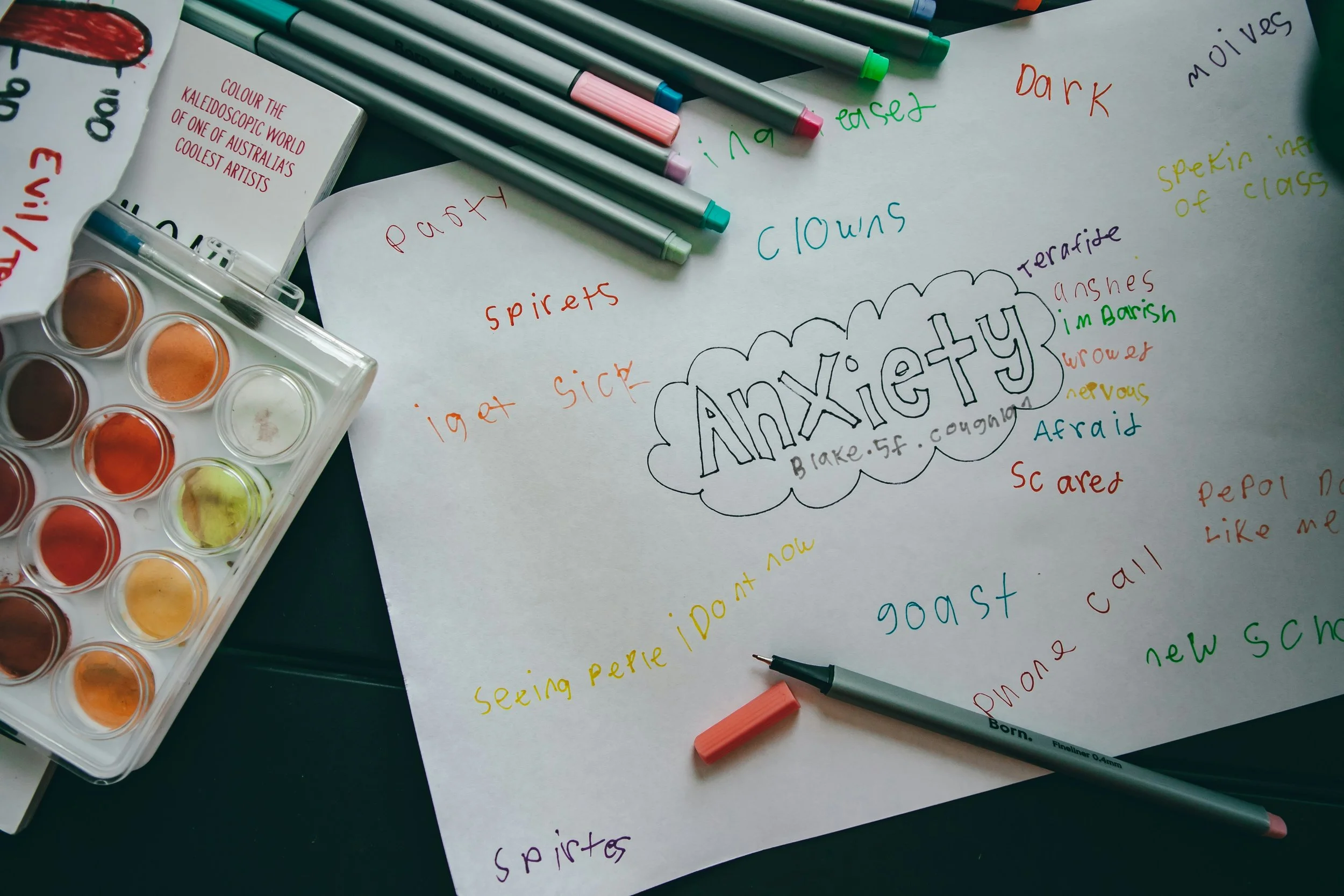
Child Anxiety Therapy in Center City, Philadelphia
and online across PA & NJ
When anxiety starts shaping your child’s world.
Your child may ask the same question repeatedly, even after you have answered it.
“Are you sure you’ll pick me up?”
“What if I throw up at school?”
“What if you die?”
“What if I can’t fall asleep?”
“What if everyone looks at me?”
You offer reassurance. You explain the plan. You remind them that they handled the same situation last week. They seem calmer for a few minutes, and then the question returns.
Anxiety in children does not always look like obvious fear.
It can look like:
irritability when it is time to leave the house,
a stomachache every Sunday night,
tears over a small mistake on homework,
or a child who needs a parent to sit beside them until they fall asleep.
It can look like refusing to try something unless they know they will be good at it,
becoming controlling during play,
or unraveling at home after holding everything together at school.
Over time, family life can begin revolving around preventing distress. You may find yourself taking a different route to avoid a dog, answering increasingly specific questions about whether food is safe, speaking for your child in public, or promising that nothing bad will happen. You know that avoiding everything is making your child’s world smaller, but watching them panic can make it feel impossible to respond differently.
At All of You Therapy, we provide attachment-focused, neurodiversity-affirming therapy for anxious children in Center City Philadelphia. We help children understand what happens inside them when anxiety takes over, build greater trust in their ability to handle uncertainty, and gradually participate in more of the life anxiety has been keeping them from.
Signs your child may be struggling with anxiety
Your child’s anxiety may show up as:

Saying their stomach hurts every school morning, asking you to feel their forehead, and crying, “What if I throw up and no one calls you?”
Asking who will be at the party, where you will sit, and exactly when you will leave, then gripping your hand at the door and whispering, “Tell them I’m sick.”
Erasing one homework answer until the paper tears and shouting, “It has to be right,” as a ten-minute worksheet stretches past dinner.
Calling you back at bedtime for another bathroom trip, one more hug, or reassurance that you would hear the fire alarm and come get them.
Saying, “I don’t even care,” when they are too scared to join the activity they wanted, then crying later because they missed it.
Holding everything together at school, then screaming about a sibling humming or the wrong cup within minutes of getting into the car.

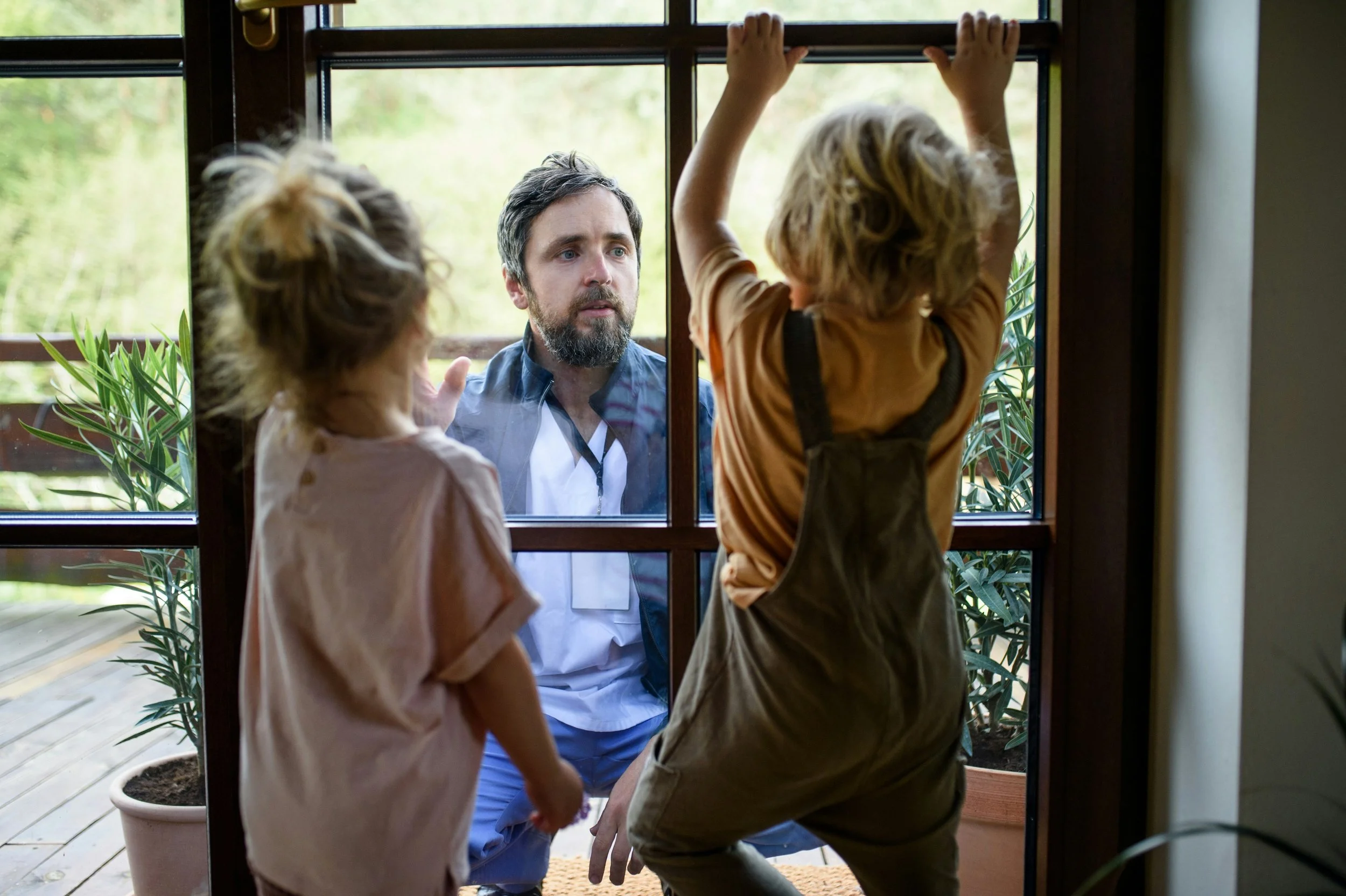
Children rarely say, “I’m struggling with anxiety.”
They say, “My stomach hurts,”
“You have to stay,”
“I need to know,”
“I can’t,” or
“I don’t care.”
Sometimes anxiety sounds like fear. Other times, it sounds like arguing, demanding, complaining, or insisting that one small detail happen exactly the right way.
Anxiety can affect the whole family
Parents of anxious children often feel pulled between compassion and exhaustion.
You may wake up anticipating the struggle to get your child out the door. Bedtime may take two hours because every attempt to leave brings another worry, request, or reason your child needs you to stay. You may hesitate before accepting an invitation because you do not know whether your child will enter the building once you arrive.
You may also question every response.
Should you reassure them one more time? Let them stay home? Encourage them to go? Are you being too accommodating, or not compassionate enough?
Other people may tell you to “just make them do it” or assure you they will grow out of it. That advice does not capture what it is like to watch your child shake, gag, sob, or plead with you not to leave.
Parents often begin anticipating and removing anything that could lead to distress. These responses come from care. Therapy gives you a place to understand these patterns without blame and learn how to offer comfort while also communicating confidence in what your child can handle.

What child anxiety therapy looks like

Children do not always have the words to explain why walking into a classroom makes their body feel sick or why one small change suddenly feels unbearable. Therapy needs to meet them through the ways they naturally communicate.
Depending on your child’s age, needs, and interests, therapy may include play, art, movement, stories, sand tray work, conversation, and carefully planned opportunities to approach feared situations.
A child might use miniatures to create a world where danger is everywhere and no grown-up notices. They may draw the alarm they feel inside their body or create characters that represent the part of them that predicts everything that could go wrong. They might practice making a small mistake in a game and notice the urge to quit, hide, or demand a restart.
A child who is afraid to speak to unfamiliar people might first answer the therapist through a puppet. Later, they may practice saying hello, asking a question, or ordering their own snack. These steps are small on purpose. Each one gives the child an experience of feeling anxious, staying connected, and discovering that they can move through the discomfort.
Helping children respond differently to anxiety
Anxiety is physical. A child may feel their heart race, their throat tighten, or their stomach turn before they consciously recognize that they are afraid. Some children then become frightened of those sensations. They feel nauseated, worry that they will vomit, and feel even more nauseated because they are worried.
In therapy, children learn to notice their body’s alarm signals without treating every signal as proof that something terrible is happening. This goes beyond teaching a child to take deep breaths. We help children understand what activates their anxiety, recognize what happens next, and remain present while uncomfortable sensations rise and fall.
Anxiety also demands certainty that no parent can provide. It wants to know that no one will get sick, the teacher will not call on your child, and you will arrive at pickup at exactly the expected time. Reassurance may settle the fear briefly, but anxiety soon finds another possibility to investigate.
Therapy helps children gradually tolerate not knowing exactly what will happen. A younger child might play a game without knowing which piece they will receive or allow the therapist to choose part of an activity. An older child might send a text without rereading it repeatedly, submit an assignment with an imperfect sentence, or enter a club meeting without knowing where they will sit.
We are not trying to overwhelm children. We are giving their brains and bodies manageable experiences of discovering that uncertainty can be uncomfortable without being unmanageable.

When anxiety and perfectionism overlap
Some children appear highly capable while living with constant internal pressure. They may receive excellent grades but spend hours on a short assignment. They might refuse to draw because the picture will not look the way they imagined or quit an activity as soon as they are no longer immediately successful.
Perfectionistic children are often praised for being careful, responsible, or mature. At home, parents see the crumpled papers, tears over a missed question, or panic before a presentation.
Therapy can help children recognize the rules they have developed for themselves, such as, “If I make a mistake, people will think I’m stupid,” or, “If I disappoint someone, they will be angry with me.” Through play, relationship, and real-life practice, they can begin taking manageable risks without experiencing every mistake as a threat to their belonging or worth.

An attachment-focused approach to childhood anxiety
Children often look to their caregivers for information about whether they are safe and whether their feelings can be handled. This does not mean that a child’s anxiety was caused by their parents. Temperament, sensory processing, neurodivergence, stressful experiences, school environments, family history, and developmental changes can all contribute.
Parents are included in therapy because the parent-child relationship is one of the most powerful places for a child to develop greater steadiness and confidence. We help parents understand what their child may be communicating through avoidance, reassurance-seeking, irritability, or attempts to control.
We also help parents respond with both compassion and confidence: “I believe that this feels scary, and I believe you can take the next step.”
The exact structure depends on your child’s age and needs. Treatment may include parent consultations, portions of sessions together, or parent-child sessions. We may help you plan what to say when your child refuses to leave the car at school, reduce repeated checking at bedtime without withdrawing comfort abruptly, or recognize when your child needs connection and when anxiety is asking you to provide impossible certainty.
Anxiety therapy for neurodivergent children
Anxiety can look different in autistic children, children with ADHD, and children with sensory or communication differences. A child may fear an unfamiliar situation while also anticipating painful noise, confusing social expectations, or demands that exceed their available capacity.
We do not assume that every avoidance behavior needs to be challenged. Sometimes a child needs gradual practice approaching fear. Sometimes they need an accommodation, clearer information, a quieter environment, or another way to participate.
Neurodiversity-affirming anxiety therapy carefully considers the purpose of a child’s response. We do not ask children to suppress natural movement, tolerate unnecessary sensory pain, make eye contact, or appear calm for the comfort of adults. We help children participate more fully in their lives while respecting how their brains and bodies experience the world.

Questions Parents Ask About Child Anxiety Therapy
-
Progress often appears in small, specific moments before it becomes a broader family shift.
Your child may still feel nervous before school but begin walking through the door without a 45-minute negotiation. They may ask for reassurance once instead of returning to the same question all evening. They may sleep in their own bed for longer stretches, order their own food, stay at a birthday party after the plan changes, or turn in an assignment without restarting it.
Your family may begin accepting invitations based on what you want to do rather than what anxiety is most likely to permit.
The goal is not for your child to never feel anxious. We want your child to develop enough trust in themselves that fear can be present without continually narrowing their choices.
-
Some anxiety is expected, especially around changes, separations, new schools, performances, and unfamiliar situations. Therapy may be helpful when anxiety repeatedly interferes with your child’s daily life. You might notice that getting to school has become a morning battle, bedtime takes hours, your child avoids activities they want to join, or the whole family has begun changing plans to prevent distress.
-
Reassurance usually helps for a few minutes, but it does not give anxiety the certainty it wants. Your child may ask, “Are you sure I won’t throw up?” and then return with, “But what if my stomach hurts?” or “What if the nurse can’t reach you?” Therapy helps children notice the urge to seek reassurance and gradually become more able to tolerate not knowing for certain.
One of the most important things children learn in therapy is that loving their sibling and wishing some things were different can both be true at the same time.
-
Anxiety can look like arguing, yelling, refusing, or trying to control every detail. A child who screams because you took a different route may be frightened about arriving late. A child who yells, “I’m not going!” may be panicking about walking into the building alone. Therapy helps us understand what the anger is protecting so your child can develop other ways to communicate and manage what they are feeling.
-
Some children work hard all day to follow directions, manage uncertainty, tolerate sensory discomfort, and keep anyone from noticing they are struggling. Once they reach the car or walk through the front door, the effort catches up with them. Therapy can help us understand what your child is managing during the day and find ways to reduce the buildup before it becomes a complete collapse at home.
-
Yes. Anxiety can cause very real physical sensations, including stomach pain, nausea, headaches, dizziness, muscle tension, and a racing heart. We never assume that a physical complaint is “just anxiety,” and medical concerns should be evaluated appropriately. When anxiety is contributing, therapy can help children understand these sensations without becoming increasingly frightened by them.
-
Bedtime removes many of the distractions that helped your child manage their worries during the day. Separation, darkness, body sensations, memories from the day, and fears about what could happen overnight may become louder. Your child may ask for repeated checks, call you back into the room, or suddenly remember important questions as soon as you try to leave. Therapy can help families create a bedtime response that remains warm and reassuring without allowing anxiety to add another step each night.
-
Children are not forced into situations without preparation, choice, or support. When approaching a fear is clinically appropriate, we work collaboratively and begin with steps the child can reasonably manage. A child who fears speaking to adults might start by answering through a puppet, then practice speaking directly to the therapist, and eventually ask a brief question outside the therapy room.
-
Parent involvement may include regular consultations, joining part of a session, or participating in parent-child sessions. We may help you decide how to respond when your child asks the same safety question for the tenth time, refuses to leave the car at school, or insists that you stay beside the bed. Parents are included as important partners, never as the cause of the child’s anxiety.
-
Many parents recognize their own fears in their child’s experience. You may find yourself imagining everything that could go wrong or feeling panicked when your child becomes distressed. This is not something you need to hide from us. Understanding what happens inside you during these moments can help you respond with greater steadiness, and individual therapy for parents is also available when additional support would be helpful.
-
It should be. A child may avoid a party because of social anxiety, but they may also be anticipating painful noise, unpredictable expectations, or pressure to interact in ways that require significant effort. We carefully distinguish between fear that may benefit from gradual practice and a need for sensory, communication, or environmental accommodations. The goal is not to make a child appear less neurodivergent.
-
Anxiety and OCD can both involve worry, avoidance, checking, and repeated requests for reassurance. With OCD, a child may experience intrusive thoughts and feel driven to complete rituals or receive a particular answer to prevent something bad from happening. They may need you to say a sentence in exactly the right way, repeat an action until it feels right, or answer the same question until they experience temporary relief. A thorough assessment helps us determine which treatment approach fits.
-
Yes. Play allows children to communicate fears they may not be able to explain directly. A child may repeatedly create rescue scenes, hide vulnerable figures, or develop elaborate rules to keep every character safe. Through play, the therapist can better understand the child’s experience and help them develop greater flexibility, confidence, and tolerance for uncertainty.
-
The length of treatment depends on the severity of the anxiety, how long it has been present, your child’s age and needs, and whether concerns such as OCD, trauma, school stress, or neurodivergence are also involved. We begin by understanding your child and family, identifying specific goals, and continuing to evaluate whether therapy is helping in daily life.
-
All of You Therapy provides in-person child anxiety therapy in Center City Philadelphia. Our office is convenient to families living in Philadelphia and nearby communities. Telehealth may also be available when clinically appropriate for children and families located in Pennsylvania and New Jersey.